What Is CSS Exams?
- CSS is Pakistan’s premier competitive examination, designed to select individuals for the country’s highest civil services. It tests not just what you know, but how you think, analyse, and present ideas.
What Is CSS Exams?
An Overview
The Central Superior Services (CSS) Examination isPakistan’s most prestigious gateway for futureleaders, designed to select officers for elite federal services such as thePakistan Administrative Service, Foreign Service, and Police Service. More than a test of memorization, CSS evaluates analytical thinking, problem-solving, and awareness of national and global affairs, making it the ultimate examination for ambitious graduates and postgraduates. The exam includes 6 compulsory subjects—Essay, English (Precis & Composition), General Science & Ability, Current Affairs, Pakistan Affairs, and Islamic Studies/Comparative Religion—alongside 6 optional subjects chosen from a wide list of disciplines like Political Science, Criminology, History, Environmental Science, or regional languages. Conducted annually by the Federal Public Service Commission, the written examination carries 1200 marks, followed by a psychological test and viva-voce, assessing not just knowledge but clarity of thought, structured argumentation, and intellectual depth. CSS demands strategic preparation, daily engagement with current affairs, and consistent practice in analytical writing, making it a platform for aspirants to develop the skills and insights required to become Pakistan’s future policymakers and thought leaders.
CSS Subjects Overview
The Central Superior Services (CSS) Examination is divided into 6 compulsory subjects and optional subjects, designed to assess both breadth and depth of knowledge. Every candidate must attempt all 6 compulsory subjects, which include Essay, English (Precis & Composition), General Science & Ability, Current Affairs, Pakistan Affairs, and Islamic Studies/Comparative Religion.
In addition, candidates choose optional subjects totaling 600 marks from FPSC-approved groups. To qualify, candidates must secure at least 40% marks in each compulsory subject and 33% marks in each optional subject. This structure ensures that aspirants demonstrate well-rounded understanding, analytical skills, and strategic insight, while also allowing them to leverage their strengths and interests through the choice of optional subjects.
Compulsory Subjects (600 Marks – Must Attempt)
1. Essay – 100 marks
2. English (Precis & Composition) – 100 marks
3. General Science & Ability – 100 marks
4. Current Affairs – 100 marks
5. Pakistan Affairs – 100 marks
6. Islamic Studies / Comparative Religion – 100 marks
Optional Subjects (600 Marks – Choose from Groups Below)
Group I (One subject of 200 marks)
- Accountancy & Auditing
- Economics
- Computer Science
- Political Science
- International Relations
Group II (One 200‑mark subject OR two 100‑mark subjects)
- Physics
- Chemistry
- Applied Mathematics (100 marks)
- Pure Mathematics (100 marks)
- Statistics (100 marks)
- Geology (100 marks)
Group III (One 100‑mark subject)
- Business Administration
- Public Administration
- Governance & Public Policies
- Town Planning & Urban Management
Group IV (One 100‑mark subject – History Focus)
- History of Pakistan & India
- Islamic History & Culture
- British History
- European History
- History of USA
Group V (One 100‑mark subject – Social Science, Science, Literature)
- Gender Studies
- Environmental Sciences
- Agriculture & Forestry
- Botany
- Zoology
- English Literature
- Urdu Literature
Group VI (One 100‑mark subject – Law & Philosophy)
- Law
- Constitutional Law
- International Law
- Muslim Law & Jurisprudence
- Mercantile Law
- Criminology
- Philosophy
Group VII (One 100‑mark subject – Languages & Social Sciences)
- Journalism & Mass Communication
- Psychology
- Geography
- Sociology
- Anthropology
- Punjabi
- Sindhi
- Pashto
- Balochi
- Persian
- Arabic
CSS SUBJECTS DETAILED SYLLABUS AND RECOMMENDED BOOKS
CSS SUBJECTS SYLLABUS
CSS Eligibility Criteria
The Central Superior Services (CSS) Examination is designed for ambitious graduates who aspire to serve Pakistan in its top federal services. To appear in CSS, candidates must meet the following criteria:
1. Nationality:
- Must be a citizen of Pakistan, including citizens of Azad Kashmir and Gilgit-Baltistan.
2. Age Limit:
- Minimum age: 21 years
- Maximum age: 30 years
- Relaxations may apply for government servants and certain reserved categories, as per FPSC rules.
3. Educational Qualification:
- At least a Bachelor’s degree (14 years of education) from a recognized university.
- Candidates in their final year of graduation may also apply, provided they complete their degree before the exam or interview.
4. Domicile Requirement:
- Must have a valid domicile of any province or region of Pakistan.
5. Physical & Mental Fitness:
- Candidates must be medically and physically fit as per FPSC regulations, especially for certain services like Police and Armed Forces-related appointments.
6. Other Conditions:
- Individuals already in government service may apply but must follow FPSC transfer/permission rules.
- Candidates must adhere to FPSC’s conduct and integrity standards throughout the selection process.
Meeting eligibility criteria is the first step to CSS success. Candidates who satisfy these requirements can focus fully on building knowledge, analytical skills, and exam strategy.
CSS Eligibility Snapshot Data
Nationality
Pakistani citizen (including Azad Kashmir & Gilgit-Baltistan)
Age Limit
21 – 30 years (relaxations for govt servants/reserved categories)
Educational Qualification
Bachelor’s degree (14 years of education) from a recognized university
Domicile
Valid domicile of any province or region of
Pakistan
Physical & Mental Fitness
Must meet FPSC medical and physical standards, especially for Police or Armed Forces services
Other Conditions
Government employees must follow FPSC
transfer/permission rules; candidates must maintain integrity and conduct as per FPSC regulations
CSS Occupational Groups – Where Successful Candidates Serve
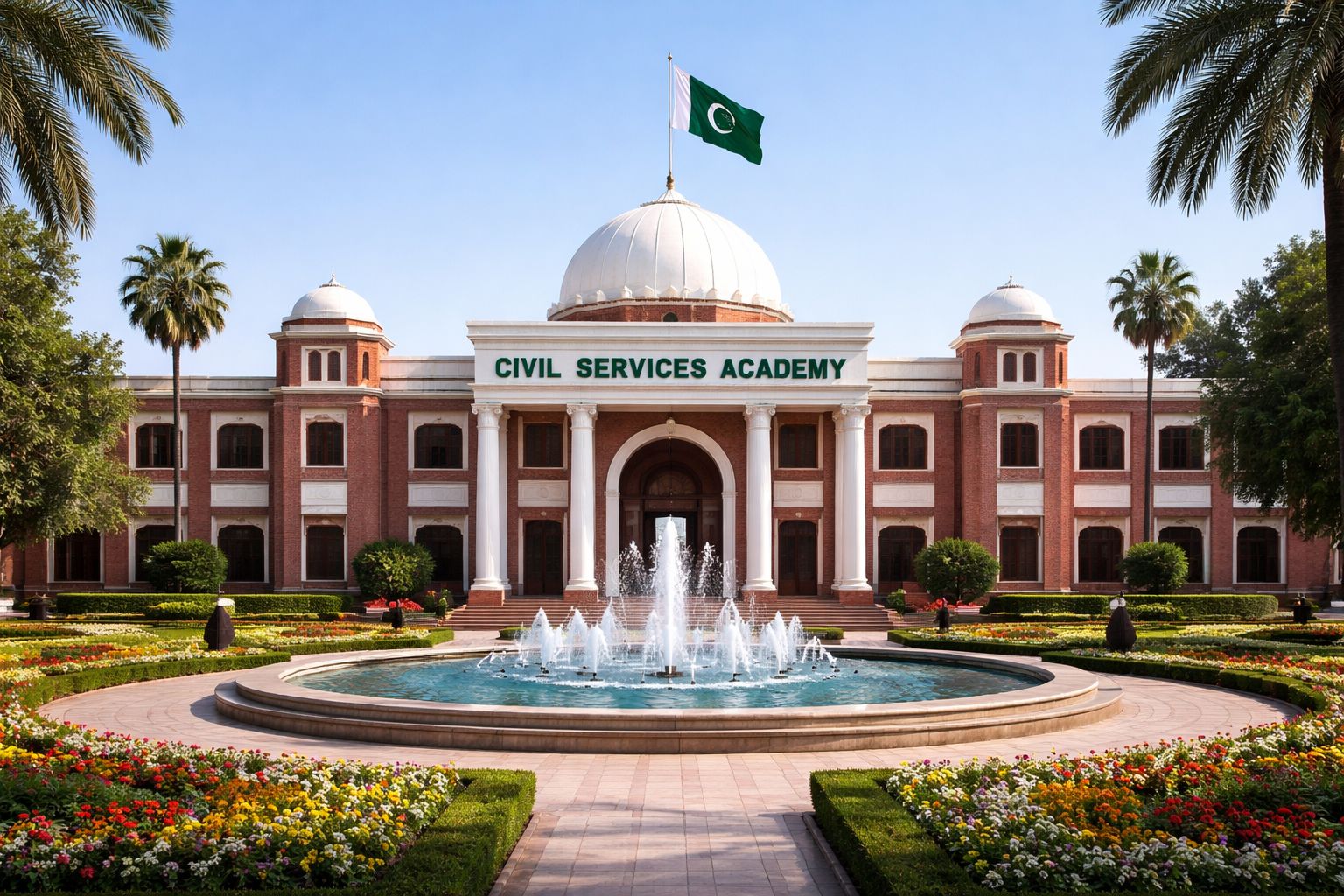
Once a candidate clears the Central Superior Services (CSS) Examination, they are allocated to one of the 12 Occupational Groups/Services under the Federal Government of Pakistan. Allocation is based on the candidate’s merit position, preferences, and available vacancies. Each group represents a different branch of the civil service with unique roles, responsibilities, and career trajectories.
Here are the CSS Occupational Groups you can be recommended for:
1. Pakistan Administrative Service (PAS) – Core administrative and policy‑making service.
2. Police Service of Pakistan (PSP) – Law enforcement, public safety, and internal security.
3. Foreign Service of Pakistan (FSP) – Diplomatic representation and international relations.
4. Inland Revenue Service (IRS) – Tax policy, revenue collection, and fiscal administration.
5. Pakistan Customs Service (PCS) – Customs operations, trade facilitation, and border regulation.
6. Pakistan Audit and Accounts Service (PAAS) – Public sector auditing and financial control.
7. Commerce and Trade Group – Trade policy, commercial affairs, and economic regulation.
8. Office Management Group (OMG) – Secretariat support, administrative coordination, and office management.
9. Information Group – Government communication, media policy, and public outreach.
10. Military Lands & Cantonments Group – Management of military lands and cantonment areas.
11. Postal Group – Postal services and logistics management.
12. Railways (Commercial & Transportation) Group – Railway commercial operations and transport management.
CSS Exam – How to Apply
The Central Superior Services (CSS) Examination is conducted annually by the Federal Public Service Commission (FPSC), and the application process is fully online. Here’s a step-by-step guide to applying:
1. Check Eligibility:
Ensure you meet all nationality, age, educational, domicile, and fitness requirements before applying.
2. FPSC Advertisement:
Each year, FPSC releases an official advertisement in newspapers and on its website announcing the CSS schedule, subjects, and number of vacancies.
3. Online Registration:
- Visit the FPSC website (fpsc.gov.pk)
- Create a new candidate account using your personal details and valid email.
- Complete the online registration form, providing educational background, domicile, and preferred optional subjects.
4. Upload Documents & Photograph:
Upload scanned copies of your CNIC, academic certificates, and recent photograph as per FPSC guidelines.
5. Fee Submission:
Pay the CSS application fee through designated banks or online payment options. Keep the challan/receipt for future reference.
6. Final Submission:
Review your application carefully and submit. Once submitted, you will receive a confirmation slip—save and print it.
7. Roll Number & Exam Center:
After verification, FPSC issues roll number slips, which contain your exam center and schedule.
8. Prepare for Exams:
With the application complete, start focused preparation for written exams, psychological test, and viva-voce.
Pro Tip:
Apply early and ensure all documents are correct. Incomplete or incorrect applications are rejected immediately.
The “Newbie” Roadmap: Starting From Zero
For a beginner, the journey should begin with a clarity of purpose. The process of transitioning from a general graduate to a CSS aspirant involves several logical steps:
1. Eligibility Check:
Ensure you possess at least a 2nd Division Bachelor’s degree (14 or 16 years of education).
2. Information Gathering:
Download the official syllabus from the FPSC website. Reading the syllabus multiple times is essential to understand the “beacon of clarity” it provides.
3. Subject Selection:
Choose your optionals based on your graduation background and interest. Do not pick a subject solely based on “scoring trends” if you find the content boring.
4. Daily Routine:
Start reading the DAWN or Express Tribune newspaper daily. Focus on the editorial pages to build your “content bank” of facts and opinions.
5. Writing Practice:
CSS is a written exam. You must write every day. Start with précis writing and one-page articles, then progress to full essays.
6. The MPT First:
Since MPT is the gateway, spend your initial weeks ensuring you are comfortable with basic math and English grammar.
Academic Foundations: Which Degree is Best for CSS?
While any HEC-recognized Bachelor’s degree is sufficient for eligibility, certain graduation programs offer a distinct advantage by providing a head-start on the CSS syllabus.
BS Political Science: The Core Advantage
BS Political Science is widely considered the ideal foundation for a future civil servant. The 4-year curriculum explores political systems, governance, and law, which are directly tested in the 200-mark Political Science optional paper. Furthermore, it overlaps with Pakistan Affairs, Constitutional Law, and International Relations, reducing the “new knowledge” an aspirant needs to acquire.
BS International Relations (IR): The Global Perspective
An IR degree is highly valued for those interested in the Foreign Service. It provides the theoretical tools (Realism, Liberalism) necessary to analyze global trends, which is critical for the Current Affairs and IR papers. IR graduates possess a broader worldview that is highly beneficial during the Viva Voce.
BS English (Literature or Linguistics): The Language Edge
Since the most common reason for CSS failure is the English language, a BS in English provides a significant structural advantage. These students have spent four years writing analytically, expanding their vocabulary, and mastering grammar—skills that are indispensable for the Essay and Precis papers.
BS History: The Narrative Depth
History degrees (History of USA, European History, or Islamic History) help candidates develop the ability to contextualise modern problems in historical patterns. This “narrative building” skill is essential for writing high-scoring subjective answers.
FAQs
Yes—many candidates qualify without academies. What matters is discipline, quality material, and consistent answer writing practice. Academies often provide structure, but serious aspirants can create the same structure themselves by following the syllabus, studying standard sources, and practicing past papers regularly. The real differentiator is not coaching but how deeply you understand issues and how clearly you present them in the exam
There is no magical number of hours. Some aspirants study 10 hours but remain unproductive, while others study 5–6 focused hours with clear objectives and achieve far better results. Effective preparation usually includes reading, note-making, and answer writing every day. The key is consistency over months rather than extreme study sessions for a few days.
Notes are useful for revision, but relying on them alone often leads to superficial understanding. The CSS examination rewards candidates who read books, research articles, and quality analyses, because they can present
arguments with depth and context. Notes should ideally be your own condensed version of what you learned from books, not a substitute for reading.
Failure in the Central Superior Services Examination Pakistan is often not due to lack of knowledge but due to poor answer presentation. Many candidates write long answers filled with information but lack clear structure, arguments, and analysis. Examiners look for clarity of thought, logical organization, and the ability to connect ideas rather than simply reproducing memorized material.
The most common mistake is collecting too many books and resources. New aspirants often spend months searching for the “perfect material” instead of actually studying. Successful candidates usually follow a limited number of quality sources, revise them multiple times, and focus heavily on past papers and answer writing practice.
Notes for CSS are not about copying books—they are about organizing information into usable arguments. Your notes should be structured, concise, and exam-oriented. Instead of writing long paragraphs, break topics into:
Headings and subheadings
Bullet points
Examples and case studies
Relevant facts, reports, or quotes
Good notes act as a revision tool and answer blueprint, helping you recall ideas quickly during the exam.